What to Do with Bulky Waste in Mitcham Before Moving
Posted on 06/05/2026
Moving house has a funny way of making every awkward item feel heavier. The sofa that seemed fine last month now looks impossible to shift. The old freezer in the corner is suddenly a problem. And that mattress you've been meaning to replace for ages? It is now staring at you like it has a grievance. If you're wondering what to do with bulky waste in Mitcham before moving, you're in the right place.
This guide breaks down the practical choices: what counts as bulky waste, how to sort it before moving day, the safest way to remove it, and when it makes sense to use professional help. It also covers the local moving side of things, because bulky waste is rarely just a disposal issue. It affects packing, lifting, vehicle space, timing, and even how calm your move feels. To be fair, it can make the whole process feel a bit less chaotic if you handle it early.
If you're already in decluttering mode, you may also find our decluttering guide for a big move useful, along with advice on how to keep house moving less stressful. Those two topics go hand in hand with bulky waste removal, honestly.

Why What to Do with Bulky Waste in Mitcham Before Moving Matters
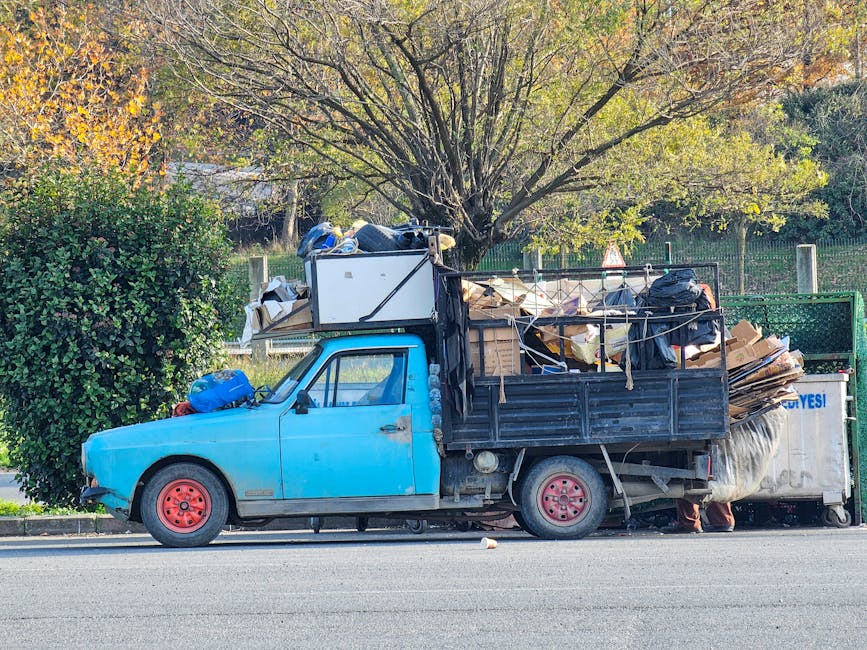
Bulky waste is any item that is too large, awkward, or heavy to handle like everyday rubbish. In a moving context, that usually means furniture, white goods, mattresses, wardrobes, bed frames, large shelving, broken appliances, and sometimes garden items or old office furniture. The exact item list changes from household to household, but the problem is the same: these things take up space, require more effort to move, and can become a safety risk if they are left until the last minute.
When bulky items are not dealt with early, they tend to create a domino effect. Boxes don't stack neatly around them. Hallways become blocked. The van fills up faster than expected. And if you're moving from a flat or a property with stairs, the awkward stuff can become the whole story of the day. Nobody wants that. Not on a rainy Tuesday in Mitcham with the clock ticking and keys due back by lunchtime.
There is also a financial angle. If an item is being moved unnecessarily, you may end up paying to transport something that you will immediately discard. If it is damaged during a rushed move, that can create stress, extra waste, and sometimes avoidable replacement costs. In short: bulky waste is worth deciding on early because it affects time, money, space, and safety all at once.
For many people, the best approach is to sort bulky belongings before the packing phase is complete. That leaves you with a cleaner inventory and a much better idea of what actually needs to travel. If you are working through furniture decisions, our furniture removals service in Mitcham may also help you plan what should be moved, stored, or cleared.
How What to Do with Bulky Waste in Mitcham Before Moving Works
The process is simpler than it first looks. You identify the bulky items, decide whether each one should be kept, sold, donated, stored, or disposed of, and then choose the most practical method for handling it. The key is to treat bulky waste as part of the move plan, not an afterthought.
A sensible bulky waste workflow usually looks like this:
- Walk through each room and list the large items.
- Separate the items into keep, remove, store, sell, or donate.
- Check condition and usefulness honestly. Not emotionally. That old sideboard may have memories, but memories do not move smoothly down three flights of stairs.
- Decide the disposal route for anything that is damaged, redundant, or impractical to take.
- Schedule removal early so the last week before moving is not overloaded.
- Prepare the item safely by emptying, disconnecting, dismantling, or cleaning where needed.
There is one important detail people often miss: bulky waste is not always waste. A sofa might be reusable. A freezer might need proper unplugging and defrosting before transport. A bed may be better moved than thrown away, especially if it is going into storage. That is why the right decision depends on both condition and logistics.
If you are unsure whether something should be moved, stored, or cleared, it helps to read practical guides like how to protect a sofa for long-term storage and the proper way to store an idle freezer. Little details there can save a lot of grief later.
Key Benefits and Practical Advantages
Sorting bulky waste before moving is one of those jobs that pays you back in several ways at once. It is not glamorous, no. But it is sensible, and sensible usually wins on moving day.
- Less to lift means less physical strain and fewer chances of injury.
- More van space means your essential items travel more efficiently.
- Faster loading and unloading because awkward, non-essential items are already dealt with.
- Cleaner start in the new place since you are not taking unwanted clutter with you.
- Better decision-making because you are not packing in panic.
- Potentially lower overall moving costs if you avoid transporting things you do not need.
There is also a mental benefit that people underestimate. A room with fewer oversized items feels lighter, calmer, and easier to organise. You can see the floor. You can measure what is left. You can imagine where things will go. That matters. Moving is part logistics, part emotional weather system.
If bulky items are tied to cleaning or end-of-tenancy work, it may also help to look at the essential steps to clean a house before moving out. Once the big items are gone, the cleaning gets noticeably easier. Funny how that works.
Who This Is For and When It Makes Sense
This guidance is useful for almost anyone moving from a home with sizeable furniture or appliances, but some people need it more urgently than others.
- Home movers who have large sofas, beds, wardrobes, freezers, or dining sets they do not want to take.
- Flat movers where stair access, tight corners, or shared hallways make bulky items harder to shift.
- Students who are moving between rentals and may need to clear oversized furniture fast, especially at the end of term.
- Families downsizing who need to reduce volume before the move rather than after.
- Landlords and tenants handling leftover furniture or appliances that must be removed before handover.
- Small business owners clearing office furniture or old equipment ahead of a relocation.
It makes particular sense when your move date is fixed, your property access is awkward, or you already know some items will not fit the new place. In Mitcham, that can be especially relevant for flats, maisonettes, and older properties where stairwells and doorways are not always generous. If that sounds familiar, the flat removals service in Mitcham and the broader removal services in Mitcham pages may be helpful when planning the move itself.
And if your move has a tight turnaround, the option of same-day removals in Mitcham can be useful for last-minute clearance decisions, though it is still better to plan early if you can. Truth be told, "last minute" and "bulky furniture" do not always get along.
Step-by-Step Guidance
1. Make a room-by-room bulky item list
Start with the obvious things: sofa, bed, mattress, freezer, fridge, wardrobe, chest of drawers, table, desk, shelving, filing cabinets, and anything that needs two people to move properly. Then look at the less obvious items, such as exercise equipment, broken garden furniture, and oversized storage boxes that have quietly become permanent residents.
This list is the foundation. Without it, people tend to guess, and guessing is where moves get messy.
2. Decide what stays, goes, or gets stored
Ask three simple questions for each item: Do I need it in the new home? Is it worth moving? Will it fit safely and sensibly? If the answer is no to all three, it is probably bulky waste rather than moving stock. If the item is in good condition but temporarily not needed, storage may be the better choice. Our storage options in Mitcham can make that part easier to plan.
3. Check whether the item can be reused
Some bulky items should not go straight to disposal if they still have usable life left. A solid pine table, a serviceable mattress, or a working appliance may be suitable for rehoming, donation, or resale. That is often the most practical and sustainable route, provided the item is clean, safe, and accepted by the receiving party.
4. Prepare appliances and furniture safely
White goods need special attention. Disconnect them properly, empty them, and allow time for drying or defrosting where relevant. Large furniture may need dismantling. Remove drawers, shelves, loose glass, and detachable parts. Wrap sharp edges. Secure doors. A little prep prevents a lot of damage.
If you are moving furniture rather than disposing of it, the guide on moving beds and mattresses efficiently is worth a look. Those are exactly the kinds of items that seem simple until you are halfway round a staircase.
5. Choose the removal method
Your options are usually local collection, donation if accepted, self-transport to a suitable facility, or professional removal. The best choice depends on the size of the items, your time, access at the property, and whether the items are being reused or discarded. If you are already booking a move, it may be efficient to combine bulky item removal with your main clearance or relocation service.
6. Time it before the final packing rush
Do not leave bulky waste until the night before the move. That is how people end up surrounded by half-packed boxes, a dismantled bed frame, and one charger they absolutely must not lose. Deal with the big items first or at least schedule them early in the week leading up to the move.
7. Confirm the property is left clear
Once bulky items are out, do one final sweep. Check cupboards, loft spaces, sheds, and behind doors. Large items have a habit of hiding in plain sight. Then make sure access routes are clear and the property is ready for handover.
Expert Tips for Better Results
Here are the small decisions that make the whole process feel much smoother.
- Measure first. If you are not sure an item fits through the new property's access, measure the item, the doorways, and any tight turns.
- Photograph everything. Useful if you are deciding whether something is worth keeping, selling, or storing.
- Don't overfill the van. Bulky waste and moving items should be planned together so the vehicle load is balanced.
- Remove loose parts early. Shelf pins, bed slats, bolts, and cables vanish quickly if you leave them in the room.
- Use the right lifting technique. Bending at the knees and keeping loads close to the body helps, and yes, it really does matter.
- Ask for help sooner rather than later. A quick lift that becomes a wobble on the stairs is not a heroic moment.
For heavier items, reading advice on solo heavy lifting and the basics of kinetic lifting can be genuinely useful. It is not about becoming a lifting expert overnight. It is about avoiding the sort of strain that ruins the rest of the week.
If your move includes especially awkward items like a piano, that is a different level entirely and deserves specialist handling. There is a reason people call in pros for that sort of job. No one wants to improvise with a grand piano and a staircase.
Common Mistakes to Avoid
Most bulky waste problems before moving come from rushing, not from bad intentions. The same mistakes show up again and again.
- Leaving decisions too late. Then everything becomes a panic choice.
- Assuming every large item must be moved. Some things are simply not worth the hassle.
- Forgetting to disconnect appliances properly. That can create leaks, mess, or delays.
- Underestimating access issues. Narrow stairs, tight corridors, and low ceilings matter more than people expect.
- Trying to lift too much alone. Even if the item feels manageable at first, awkward balance changes everything.
- Not checking condition before disposal. A reusable item should not be treated like rubbish by default.
- Mixing junk and essentials. One messy pile leads to another, and soon the whole room is a blur.
One small but important point: do not let sentimental value make the final decision for everything. Sometimes an item is only surviving because it has a story. Stories matter, of course, but they do not need to take up half the van. There's the practical side, and then there's the emotional side. Both deserve a say, but not equal power over moving day.
Tools, Resources and Recommendations
You do not need a warehouse full of equipment to manage bulky waste well, but a few simple tools make a real difference.
- Measuring tape for doorways, items, and van space.
- Heavy-duty tape for securing loose drawers, doors, and cables.
- Marker pens and labels to distinguish keep, store, sell, and dispose piles.
- Protective blankets or wraps for items being moved or stored.
- Gloves for handling rough, dusty, or sharp-edged items.
- Dismantling tools such as screwdrivers or Allen keys for furniture breakdown.
- A trolley or sack truck where appropriate, especially for heavier appliances.
If you are still collecting packing supplies, our packing and boxes service in Mitcham can help support the wider move, especially once the bulky items have been sorted. And if you want to understand how professional removals are organised, the services overview is a sensible place to start.
For people who prefer a calmer moving process overall, it can also help to combine bulky waste planning with a wider house-moving checklist. That approach tends to keep the move readable. Yes, readable. You want to be able to look at the day and know what happens next.
Law, Compliance, Standards, or Best Practice
Without getting lost in jargon, there are a few best-practice principles worth keeping in mind in the UK.
First, do not leave bulky items where they obstruct shared access, pavements, stairwells, or fire exits. That can cause inconvenience at best and safety issues at worst. Second, only hand waste to people or services that are properly set up to take it. If someone offers a suspiciously cheap haul-away and cannot explain where the items will go, that is a red flag. Third, if you are disposing of items with electrical components, refrigerants, or sharp materials, treat them with care and use a method that suits the item type.
There is also a common-sense standard that is easy to overlook: if an item can be moved safely, stored safely, or reused safely, choose the route that creates the least harm and the least waste. That is the kind of practical sustainability that actually works in day-to-day life. Our recycling and sustainability page reflects that approach.
On the safety side, professional movers should be working in line with clear safety practices and suitable insurance. If you are comparing providers, it is perfectly reasonable to ask about handling procedures, liability, and how fragile or bulky items are protected. A trustworthy company will not mind those questions. In fact, they should expect them.
Options, Methods, or Comparison Table
Different bulky waste options suit different situations. There is no one-size-fits-all answer, which is probably why people get stuck. This table gives a clear side-by-side view.
| Option | Best for | Pros | Things to watch |
|---|---|---|---|
| Keep and move | Good-condition items you still need | Cheaper than replacing, keeps familiar items | Requires space, lifting, and careful packing |
| Store temporarily | Items you want but cannot place yet | Flexibility, protects valuable furniture | Extra cost and the need for good preparation |
| Sell or donate | Reusable items in decent condition | Reduces waste, may help others, may recover value | Can take time and depends on acceptance |
| Professional bulky item removal | Large, awkward, or time-sensitive clearance | Less strain, faster turnaround, simpler coordination | Needs booking and clear item details |
| Self-disposal | Smaller bulky loads and confident movers | Direct control over timing | Vehicle space, lifting effort, and time on the road |
For most households, the best approach is a mix. Some items are kept, some are sold, and the awkward leftovers are cleared by a mover or removal service. That blend tends to be the least stressful, especially if your moving deadline is tight.
Case Study or Real-World Example
Here's a realistic scenario. A couple in a Mitcham flat are moving into a smaller place and have a three-seater sofa, a freezer, a bed frame, and a large wardrobe that will not fit in the new bedroom layout. At first, they planned to take everything and "figure it out later." Which, as you can guess, was already sounding expensive.
Once they measured the new property, the picture changed. The wardrobe would block the room. The freezer had to be emptied and moved carefully, or not at all. The sofa was still usable, but they were not sure it would suit the smaller lounge. So they split the job up: the bed and mattress were moved with proper preparation, the freezer was cleaned and either stored or transported depending on final plans, and the wardrobe was removed before moving day. The sofa decision was made after checking the new space and comparing it with a long-term storage option.
The result was simple: the move took less time, the van was easier to load, and the new flat did not start life cluttered with furniture they no longer wanted. Nothing magical happened. They just made the decisions early. That's the trick, really.
If your situation is similar, you may also want to compare broader moving support such as man and van services in Mitcham and house removals in Mitcham, especially if bulky items are only one part of the job.
Practical Checklist
Use this checklist in the days before your move. It keeps the bulky stuff from becoming the loudest part of the week.
- Walk through every room and list large items.
- Decide whether each item is being moved, stored, sold, donated, or disposed of.
- Measure items and access points if there is any doubt about fit.
- Book any removal or clearance help early.
- Empty and disconnect appliances properly.
- Dismantle furniture where needed and keep fixings together.
- Label items clearly so nothing important gets thrown away by mistake.
- Protect floors, walls, and doorframes during removal.
- Check stairways, parking, and access for the moving vehicle.
- Leave a final sweep for lofts, cupboards, sheds, and behind doors.
- Confirm the property is clear before handover.
Expert summary: the smartest way to handle bulky waste before moving is to decide early, separate reusable items from true waste, and match each item to the easiest safe option. That keeps the move lighter, cleaner, and far less frantic.
Conclusion
Bulky waste can feel like the most annoying part of moving, but it does not have to control the day. If you sort it early, measure properly, make practical decisions, and use the right support where needed, the whole move becomes easier to manage. You protect your back, save time, and avoid dragging unnecessary stuff into a new home that deserves a fresh start.
In Mitcham, that means thinking a step ahead: which items are truly worth moving, which need storage, and which are better removed before the van arrives. That simple bit of planning can make a huge difference, and often does. Moving is hard enough without carrying yesterday's clutter into tomorrow.
Get a free quote today and see how much you can save.
If you want a calmer move, start with the big items now. The rest has a habit of falling into place once the bulky stuff is out of the way.